
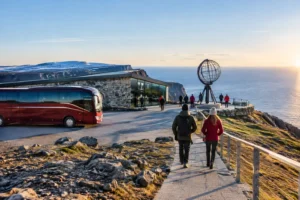
The last stretch towards the North Cape is not a journey to rush. The road climbs through open Arctic landscape, the horizon widens, and then the plateau appears above the Barents Sea. This North Cape visitor centre guide will help you plan your time at the site with confidence, whether you are arriving from Honningsvåg on a cruise-day excursion or making the journey as part of a longer stay in Northern Norway.
What the North Cape visitor centre is
The visitor centre, commonly known as North Cape Hall, sits on the North Cape plateau beside the famous globe monument. It offers a warm, sheltered place to pause before or after spending time outside at the cliff edge. This matters more than many visitors expect: even in summer, crisp wind and low cloud can make the plateau feel markedly colder than the town below.
The centre combines practical facilities with exhibitions and viewing spaces that add context to the landscape. You may find films, historical displays, a restaurant or café, a shop, and other indoor areas to explore. Exact opening times, services and exhibition access can vary by season, weather and local operations, so treat the centre as part of the experience rather than planning your whole visit around one feature.
The setting remains the main reason to come. From the plateau, the land falls sharply towards the sea and the northern horizon seems almost without end. On a clear day, it is a powerful place to stand quietly and take in just how far north you have travelled.
Plan your journey before you leave
The North Cape lies at the northern end of Magerøya, around 35 kilometres from Honningsvåg. The distance may look modest, but Arctic roads deserve time and respect. Conditions can change quickly, especially outside the summer months, and traffic may slow behind weather controls or snow-clearing operations in winter.
For independent travellers, allow more time than a map suggests. You will want room for photographs, changing light, a comfort stop and the possibility that fog briefly hides the view before lifting again. If you are visiting on a cruise call, a scheduled excursion with a clear return plan removes the pressure of watching the clock while you are at the plateau.
A professionally driven transfer also lets everyone enjoy the scenery. Reindeer may be seen along the road, and the broad, treeless landscape has a stillness that is easy to miss when you are concentrating on driving. North Cape Chauffeur Services offers journeys designed to make that road part of the occasion, with local drivers who understand the route and the conditions.
How much time should you allow?
Most visitors are comfortable with around one to two hours at the plateau and visitor centre once they arrive. That is enough time to walk to the globe monument, take photographs, use the facilities and explore indoors at an unhurried pace.
Allow longer if the weather is clear and you enjoy photography, or if you are visiting close to midnight in summer. Conversely, in strong wind, freezing rain or dense fog, your outdoor time may be shorter. A good plan has some flexibility: the North Cape does not always reveal itself on a timetable.
What to see at the plateau
The globe monument is the image most people associate with the North Cape. It stands near the cliff edge and marks a memorable photo stop, particularly under the midnight sun or beneath a sky filled with shifting cloud. It can be busy when several coaches arrive together, so a little patience often makes for a calmer photograph.
Do not stop there. Walk carefully around the marked areas and look out across the sea. The feeling of being at Europe’s northern edge is not created by a single monument, but by the scale of the ocean, the exposed rock and the changing Arctic light.
Inside North Cape Hall
The indoor spaces offer welcome shelter and a different way to understand the destination. Films and exhibitions can bring together the geography, wildlife, weather and long history of travel to the cape. They are especially worthwhile if visibility outside is limited.
The restaurant or café can be useful for a hot drink or meal, though peak arrival times may be busy. The shop is a convenient place for a keepsake, postcards or practical items, but it is wise not to rely on it for essential outdoor clothing. Bring what you need with you, particularly in colder months.
Facilities and access arrangements may differ between summer, winter and special-event periods. If there is something specific you hope to see or use, check the current details before travelling.
Choose the right time of year
Summer brings the midnight sun, generally from mid-May to late July. During this period, the sun may remain above the horizon through the night, bathing the plateau in soft gold and silver light. Late evening visits can feel particularly special, although the weather can still be cold and windy.
Autumn offers darker evenings, deeper colours and a quieter mood. It can also bring fast-moving weather, with rain, wind and mist all possible on the same journey. The northern lights may appear when skies are dark and clear, but they are a natural phenomenon, never a guarantee.
Winter visits have their own character. Snow, polar night light and a more dramatic sense of remoteness make the journey unforgettable for travellers prepared for true Arctic conditions. Road access can be managed according to weather and safety requirements, sometimes involving convoy arrangements. Build flexibility into your itinerary and follow local guidance rather than treating the road as an ordinary drive.
Spring is a season of transition. Snow can remain on the plateau while the days rapidly grow brighter. It is often beautiful, but conditions still call for warm layers and sensible footwear.
Dress for the plateau, not the forecast in town
The North Cape is exposed. Even on a bright summer day, bring a windproof outer layer, warm mid-layers and closed, sturdy shoes with a good grip. A hat and gloves are useful throughout much of the year. In winter, insulated footwear and additional warm layers are essential.
Fog is common enough that it should not spoil the day if it appears. The experience may become quieter and more atmospheric, with the sound of wind and sea replacing the long view. If conditions change, stay within marked areas, keep clear of cliff edges and listen to any advice from staff and drivers.
A small camera cloth can be helpful in mist or sea spray, while a secure strap is sensible in high winds. Most importantly, keep your hands free when walking on uneven or icy ground.
A calmer way to visit from a cruise ship
Cruise guests often have only a few hours ashore, which makes dependable timing especially valuable. Choose transport that states its departure point, journey timing and return arrangements clearly. Arrive at the meeting point a little early, keep your ship details to hand and leave room in your plans for the walk back from the plateau to the vehicle.
For groups and tour operators, local support can make an even greater difference. Experienced relief drivers can operate a visiting company’s own coach while its regular driver takes mandatory daily rest. Alternatively, a suitable local vehicle and professional driver can be arranged for the group. It is a practical way to protect both passenger experience and road safety, including for late-night midnight sun departures.
Let the journey stay with you
The visitor centre gives your North Cape visit comfort, context and a place to warm up, but the lasting memory is often simpler: stepping outside into the Arctic air and looking towards an endless horizon. Give yourself enough time to arrive calmly, dress for the conditions and let the weather be part of the story. The North Cape is at its best when you do not have to hurry past it.