
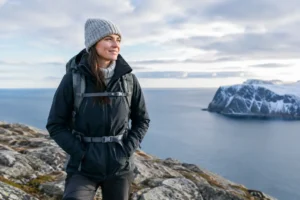
The moment you step outside at North Cape, the wind can change the feel of the day completely. If you are wondering what to wear at North Cape, think in layers rather than one very heavy outfit. The goal is simple: stay warm, dry and comfortable enough to enjoy the endless horizon, take your photographs and stand quietly in one of Europe’s most remarkable places.
The weather here is part of the experience. It can be bright and still one moment, then cold, wet or windy the next, even in summer. With the right clothing, you can meet those changes calmly and keep your attention where it belongs – on the Arctic landscape.
What to wear at North Cape in every season
A windproof outer layer is the foundation of a good North Cape outfit. The cape is exposed to the Barents Sea, with very little shelter from the wind. A waterproof jacket with a hood is usually more useful than a thick coat that lets the wind through. Choose one with enough room underneath for insulating layers.
Under your jacket, wear a warm mid-layer such as fleece, wool or a light insulated jacket. Merino wool is especially comfortable because it remains warm if the air feels damp and does not feel as clammy as cotton. A long-sleeved base layer beneath it gives you flexibility, particularly on days when the temperature changes between Honningsvåg and the plateau.
For your legs, ordinary trousers may be perfectly suitable on a mild, dry summer day, but they are rarely enough in colder weather. Wear thermal leggings or long underwear beneath walking trousers, or choose insulated, weather-resistant trousers if the forecast is cold, wet or windy. Jeans can become uncomfortable quickly once they are wet, so they are not the best choice for an Arctic excursion.
Summer: prepare for wind, not beach weather
North Cape’s summer light is unforgettable, especially around the midnight sun season. Yet summer temperatures can still feel cool, and wind chill often catches visitors by surprise. Pack a waterproof and windproof jacket, a fleece or warm jumper, long trousers and sturdy shoes. A thin hat and gloves are sensible additions, even in July.
On an unusually calm and sunny day, you may not need every layer during the journey. Keep them with you nonetheless. Conditions at the cape can be noticeably colder than in town or at the cruise port, and the weather may shift while you are travelling.
Autumn and spring: expect quick changes
Spring and autumn bring beautiful low light, changing colours and a stronger chance of rain, sleet or icy conditions. This is the time to favour waterproof clothing rather than relying on an umbrella. An umbrella is difficult to use in exposed wind and leaves one hand occupied when you may prefer to hold a rail or camera.
Add thermal base layers, warm socks, gloves and a hat that covers your ears. A neck warmer or scarf makes a genuine difference when the wind is sharp. These small items take little room in a day bag but can transform your time outdoors.
Winter: dress for warmth from head to toe
Winter at North Cape is a true Arctic experience. Snow, ice, darkness and cold air create extraordinary conditions, but they call for more deliberate preparation. Start with thermal base layers, then add an insulating fleece, wool jumper or down layer, followed by a fully windproof and waterproof outer jacket.
Choose insulated trousers or thermal layers beneath waterproof over-trousers. Bring warm, waterproof gloves or mittens, a wool hat, a neck gaiter and thick wool socks. Mittens are often warmer than gloves, although gloves can be easier for using a camera or phone. If you plan to take many photographs, consider wearing thin liner gloves beneath warmer mittens.
Footwear matters more than most travellers expect
Comfortable, closed footwear with a good grip is essential. The paths and viewing areas may be wet, snowy or icy depending on the season, and the ground can be uneven. Waterproof walking boots are ideal, especially outside the warmest summer weeks. They should have soles with reliable tread and enough room for warm socks without squeezing your feet.
In summer, sturdy trainers may be sufficient if the forecast is dry and you prefer a lighter option. However, avoid smooth-soled shoes, open sandals and footwear that is not comfortable for walking. The wind can make even a short stroll feel colder than expected, and wet feet will shorten your enjoyment of the visit.
If you are travelling in winter, ask whether ice grips are recommended for the expected conditions. They can provide useful reassurance on icy surfaces. Your driver or local host can advise on the day, as Arctic conditions are never identical from one departure to the next.
Small accessories that earn their place in your bag
You do not need specialist expedition equipment for a visit to North Cape, but a few practical accessories are worth bringing. Sunglasses are useful in bright summer light and when snow reflects the low winter sun. Lip balm and moisturiser can help protect skin from crisp, dry air and wind.
A small backpack is helpful for carrying spare layers, water, a camera and any medication you may need. Keep your phone in an inside pocket when temperatures are low, as batteries drain faster in the cold. A compact power bank can be useful, especially for cruise passengers who are taking photographs throughout a full day ashore.
If rain is forecast, pack a waterproof cover for your camera or bag. It is better to have your hands free and your belongings protected than to manage several loose items in gusty weather.
Dress for the journey as well as the destination
The road from Honningsvåg to North Cape is part of the experience. You will pass open Arctic scenery, coastal views and wide stretches of northern landscape before reaching the plateau. On a comfortable coach journey, you can remove a layer if you become warm, then put it back on before stepping outside.
This is why adaptable clothing works best. Avoid dressing so heavily that you are uncomfortable during the transfer, but do not leave your warmest layer in your hotel or cruise cabin. Bring it with you. A relaxed, professionally driven journey allows you to watch the changing scenery rather than worry about the road, but the weather at the destination still deserves respect.
North Cape Chauffeur Services plans its journeys with local conditions in mind, and drivers are familiar with the changing character of the route. Still, personal comfort begins with what you bring. A few well-chosen layers give you the freedom to enjoy the stop without rushing back indoors.
A simple North Cape packing approach
Before leaving, check the forecast for the North Cape plateau rather than only for the port or Honningsvåg. Then build your outfit around a waterproof outer jacket, warm layers and footwear with grip. Add hat, gloves and a neck warmer whenever there is any chance of cold wind – which is most of the year.
There is no need to sacrifice style entirely, but North Cape is a place where practical clothing pays off. Neutral outdoor layers photograph well against sea, sky and snow, and comfort lets you stay present for longer. You may remember the cold air on your cheeks and the stillness beyond the cliff for years afterwards; with the right clothing, you will remember it for the right reasons.