
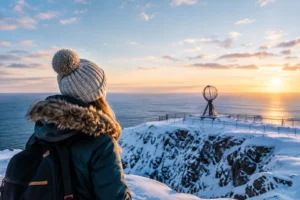
Winter at the North Cape is not a place to rush. The road from Honningsvåg crosses an open Arctic landscape where light, wind and weather can change the character of a journey within minutes. This North Cape winter travel advice is designed to help you arrive prepared, comfortable and able to enjoy the stillness that makes the destination so memorable.
For many visitors, the North Cape is a once-in-a-lifetime stop, often within a carefully timed cruise itinerary. A little planning removes much of the uncertainty. Choose warm layers, allow room in your schedule and let local conditions set the pace. The reward is a journey with crisp Arctic air, wide winter views and the feeling of standing at Europe’s northern edge.
Plan around conditions, not just the clock
In winter, weather is part of the experience. Snow, wind, ice and low visibility are all possible on the road to the North Cape. Conditions can be calm and clear, or they can require extra patience. This is normal in Finnmark, and a sensible plan leaves space for it.
If you are visiting from a cruise ship, check your meeting time carefully and allow enough time to return to the port well before your all-aboard deadline. Independent travellers should also avoid scheduling onward plans too tightly on the same day. Winter travel works best when there is a little flexibility built in.
Road access may occasionally be managed according to conditions, including convoy driving when required. A local driver follows the latest guidance and understands when the journey should proceed carefully, wait or change pace. That knowledge is particularly valuable when the roads are unfamiliar and daylight is limited.
Choose a guided transfer over winter self-driving
Hiring a car can suit confident travellers in the right conditions, but it brings responsibilities that are easy to underestimate. Arctic winter driving means ice, darkness, wind-blown snow and roads that may look very different from the routes you know at home. You also need to understand local driving practices, winter tyres and any traffic restrictions.
For most visitors, a professionally driven transfer is the calmer choice. You can settle into a comfortable seat, watch the changing scenery and arrive without having spent the journey concentrating on the road. It also keeps your group together, which is useful for couples, families and friends travelling on a short port call.
North Cape Chauffeur Services has served the region for generations, and its Polar Express journeys are shaped around the practical realities of travelling between Honningsvåg and the North Cape. The purpose is simple: to make the transfer feel like part of the Arctic experience, rather than an obstacle before it.
What to wear at the North Cape in winter
The North Cape plateau is often colder and windier than Honningsvåg. Even if the town feels manageable, the exposed cliff top can quickly feel sharp. Dress for standing outside, taking photographs and moving at an unhurried pace, rather than only for the short walk from your hotel or ship.
The most reliable approach is layering. Start with a warm base layer, add an insulating fleece or wool layer, then wear a windproof and waterproof outer jacket. Thermal trousers or an extra lower layer can make a real difference on cold days. Wool socks, insulated boots with good grip, a warm hat and gloves are essential.
Mittens are often warmer than gloves, though gloves can be more practical for using a camera or mobile phone. Many travellers take both. A neck warmer or scarf helps protect your face from the wind, while hand warmers can be welcome if you tend to feel the cold quickly.
Do not rely on fashion trainers or smooth-soled shoes. Paths and surfaces can be snowy or icy, and warm, stable footwear helps you enjoy the visit with more confidence. It is better to feel slightly over-prepared than to cut your time short because your feet are cold.
Keep your camera and mobile phone ready for the cold
Cold temperatures shorten battery life. Charge devices fully before departure and keep a power bank close to your body, inside an inner pocket, where it stays warmer. If you are taking a camera, bring a spare battery and keep it in a pocket rather than your bag.
Condensation can occur when you bring cold equipment indoors. Let cameras warm gradually in a closed bag where possible, rather than exposing them immediately to warm air. It is a small precaution that can protect your equipment and save time.
Make the most of Arctic daylight
Winter daylight in Northern Norway is unlike daylight farther south. In the deepest winter, the sun may remain below the horizon, yet the landscape is not simply dark. Blue twilight can stretch across snow, sea and mountain, creating a quiet, luminous atmosphere. Later in the season, daylight steadily returns and the colours shift again.
This means you should set different expectations from a summer visit. You may not have long, bright days, but you can have beautifully soft light and dramatic skies. Keep your camera accessible, but also take time to look out of the window. The road itself passes through a landscape that deserves your attention.
If seeing the Northern Lights is high on your wish list, treat it as a possibility rather than a promise. Clear skies, solar activity and darkness all need to align. A journey to the North Cape is worthwhile in its own right, whether the aurora appears or not.
Book early and share the details that matter
Winter departures can be popular, especially on days when cruise ships are in Honningsvåg. Booking in advance gives you a clearer plan and avoids spending valuable time on arrival trying to arrange transport. Keep your confirmation and meeting details easy to find, and check messages before setting out in case conditions require an update.
When booking, share relevant needs in good time. This may include reduced mobility, travelling with a child, a larger item of luggage or a tight cruise schedule. Clear information allows your transfer provider to advise honestly about what is practical on the day.
Bring a small day bag rather than carrying everything with you. Water, a snack, lip balm, medication, spare gloves and a power bank are useful additions. The dry cold and wind can be tiring, even when the journey itself is comfortable.
Let the weather shape the experience
The finest winter journeys are not always the ones with perfect blue skies. Low cloud can make the road feel wonderfully remote. Fresh snow softens the landscape. A clear horizon can arrive suddenly after a snowy stretch, making the view from the cape feel even more dramatic.
Try not to measure the day only by a photograph or a checklist. The sound of boots on snow, the changing light over the Barents Sea and the calm warmth of returning to a coach after time outside all belong to the memory. In the Arctic, conditions are not a backdrop. They are part of the story.
A final word before you travel
Pack warmly, leave time in your plans and choose the support that lets you relax. Then, when the road opens towards the endless northern horizon, you can give the North Cape the attention it asks for: not hurried, not distracted, simply present.