
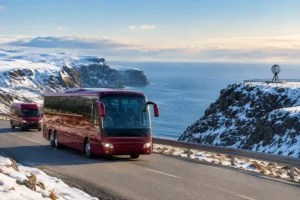
The final stretch towards North Cape is part of the experience: open sea, treeless tundra and an immense northern horizon. Yet it is natural to ask, Are North Cape roads safe? For most visitors, the answer is yes, provided the journey is planned around Arctic conditions and local guidance. This is a remote landscape where the weather deserves respect, and that respect is built into how the road is managed.
The route from Honningsvåg to North Cape follows the E69, a well-used road connecting visitors with one of Europe’s most remarkable viewpoints. It is maintained throughout the year, but it is not an ordinary road. Wind, snow, fog and rapidly changing light can alter conditions, particularly from autumn through spring. The safest way to travel is to allow the day’s conditions, rather than a fixed expectation, to set the pace.
Are North Cape roads safe in every season?
North Cape roads are generally safe for visitors in summer, when daylight is long, road surfaces are usually clear and visibility is often good. Even then, the weather can turn quickly. Sea fog may roll in, rain can make the road wet, and strong coastal winds are possible. Sensible driving, warm layers and a little flexibility remain worthwhile.
Winter brings a different kind of beauty and a different set of considerations. Snow-covered hills, low golden light and crisp Arctic air make the route memorable, but snow and wind can reduce visibility and create drifting across exposed sections. Roads may be cleared and treated, yet drivers still need experience, suitable tyres and a careful approach.
Safety is not about pretending the Arctic is predictable. It is about recognising that conditions are monitored closely, decisions are made early when needed, and travellers have reliable options when the weather is less welcoming.
What can affect the journey to North Cape?
Wind and visibility
The North Cape plateau sits in an exposed coastal environment. Strong wind is often more significant than snowfall, especially where the road crosses open ground. A clear morning can become misty or windy later in the day, while a snowy forecast can sometimes give way to a calm, bright journey.
For visitors, visibility is the practical concern. When the landscape fades into white or fog, it becomes harder to judge bends, distance and the position of other vehicles. Local drivers know which stretches demand extra care and adjust their speed accordingly. This is one reason a professionally driven transfer can feel considerably more relaxed than self-driving.
Snow, ice and winter road management
During the winter season, snow clearing is a normal part of life in Finnmark. The authorities monitor the route and plough where necessary. At times, the final road to North Cape may be temporarily closed or subject to convoy driving behind a snowplough. These arrangements are not a sign that the route has been forgotten or left to chance. They are a practical safety measure for travelling through severe weather.
Convoy travel can mean waiting for an organised departure and following instructions carefully. It may slightly change the day’s timetable, but it also brings reassurance: vehicles proceed together under controlled conditions rather than facing the exposed road alone.
Darkness and changing light
From late autumn to early spring, daylight is limited, and the polar night period brings its own atmosphere. Darkness does not make travel unsafe by itself, but it adds to the demands on a driver. Headlights, reflected snow, windscreen glare and wildlife at the roadside all require attention.
In summer, the opposite can be true. The midnight sun gives visitors long hours of light, but tiredness can still affect anyone driving after a busy day of sightseeing. Whether it is bright at midnight or dark in the afternoon, an unhurried journey is the wiser one.
Is self-driving to North Cape a good idea?
Self-driving can be a rewarding choice for confident travellers who are used to remote roads and have hired a suitable vehicle. In good summer conditions, many visitors enjoy the independence of stopping for photographs or taking their time along the coast. The distance from Honningsvåg is manageable, and the route is clearly defined.
The trade-off is responsibility. You need to be comfortable assessing weather reports, adapting your plans, driving on potentially icy surfaces and accepting that a temporary closure may alter your itinerary. Rental vehicles should be properly equipped for the season, and drivers should understand the terms of their hire agreement, including winter tyres and any restrictions.
For travellers unfamiliar with snow, ice or high winds, winter self-driving can turn a special day into a tense one. Cruise guests have an additional consideration: returning to the ship on time. Building in a generous margin is essential, because Arctic conditions do not always follow a timetable.
A few preparations make a meaningful difference:
- Check the latest weather and road information shortly before departure, not only when planning the trip.
- Keep warm clothing, water and a charged mobile phone with you, even for a short route.
- Do not stop in unsafe places for photographs or step into the road for a better view.
- If conditions feel beyond your experience, choose a local transfer rather than pressing on.
Why a local driver changes the experience
A local professional driver does more than take the wheel. They read the landscape, understand the rhythm of changing weather and know when a little patience is the safest decision. They also know that visitors have come to see North Cape, not to spend the whole journey watching the road surface with worry.
On a coached transfer, you can look out towards the coastline, watch for reindeer or simply enjoy the quiet between Honningsvåg and the plateau. There is comfort in knowing that the vehicle is prepared for the route and that the person driving it is familiar with its bends, exposed sections and seasonal conditions.
For guests with limited time, this local knowledge matters especially. A well-organised journey accounts for the return trip as carefully as the outward one. It allows time at the destination while keeping safety and punctuality at the centre of the day.
North Cape Chauffeur Services has operated in this region for generations, and its Polar Express journeys are designed around that simple principle: the road is part of the Arctic experience, but it should not be the source of your stress.
What happens if the road closes?
Temporary closures are possible in severe weather, particularly in winter. They are made to protect people, not to disappoint them. If authorities close a section of road or introduce a convoy system, the right response is to follow the instructions given and remain flexible.
Independent travellers should avoid trying to bypass barriers or continue beyond official advice. Conditions can be more difficult further ahead than they appear from a sheltered car park or town street. If you are travelling with a scheduled operator, the team will assess the situation and communicate any changes to the plan as clearly as possible.
It is worth remembering that a closed road is usually temporary. Arctic weather shifts quickly, and snow clearance teams work hard to reopen routes when it is safe to do so. A calm approach is part of travelling well here.
Planning a safer, calmer North Cape visit
Choose a departure time that leaves room for changing conditions, especially if you have a flight, cruise departure or onward connection. Wear footwear with a good grip for the North Cape plateau, where surfaces can be wet, icy or uneven. Bring a windproof outer layer even on a mild-looking day, as the cape can feel much colder than Honningsvåg.
Most of all, avoid measuring the success of your visit only by whether every detail happens at a fixed minute. The North Cape is shaped by the elements. Sometimes the horizon is perfectly clear; sometimes cloud and mist give the place a quieter, more dramatic character. Both belong to the journey.
The roads to North Cape are safe when they are treated with the care this northern landscape asks of every traveller. Leave the driving to experienced hands where you can, listen to local advice, and give yourself time to arrive with a clear mind – ready for the stillness, the sea and the endless horizon ahead.