
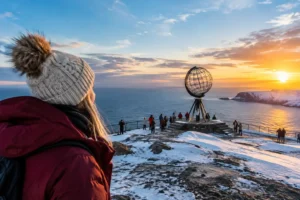
A clear morning in Honningsvåg can become a snowy afternoon on the road to the North Cape. That is part of the character of the far north, and it is why Arctic weather forecasts are useful not as a promise of perfect conditions, but as a calm starting point for sensible travel plans.
For visitors with a cruise departure to meet, a family day out to enjoy, or a long-awaited journey to Nordkapp, weather can feel like the one uncertain part of the day. The good news is that Arctic travel does not need to feel complicated. With realistic expectations, suitable clothing and an experienced local driver, changing conditions become part of the experience rather than a reason to worry.
What Arctic Weather Forecasts Can Tell You
A forecast for Magerøya is more than a temperature reading. Wind strength, wind direction, precipitation, visibility and road conditions can each affect how the journey feels. A temperature near freezing may be comfortable in still air, yet feel distinctly colder when a coastal wind arrives. Light snow can look magical from inside a warm coach, while stronger snowfall and drifting snow may require slower, more cautious progress.
The forecast is most useful when read as a pattern across the day. Look at the expected conditions around your departure time and return time, rather than focusing only on the morning. In the Arctic, a weather window can open quickly, and it can close just as quickly.
Visibility matters particularly on open stretches of road. Low cloud, sea mist or blowing snow can soften the vast views that make the route so memorable. This does not mean there is nothing to see. Often, the changing light, snow-covered ground and stillness of the landscape have their own quiet beauty. It simply means that the familiar postcard panorama may appear in fragments rather than all at once.
Why Conditions Change So Quickly Near North Cape
The North Cape sits at the meeting point of sea, exposed plateau and northern weather systems. This creates a landscape of striking contrasts. Coastal air can bring milder temperatures, while the higher, more open road towards the cape may be colder, windier and more exposed.
In winter, wind can move snow across the road even after snowfall has stopped. In spring and autumn, conditions may shift between wet roads, frost and snow within a short distance. Summer visitors may enjoy bright skies and the midnight sun, but should still expect cool air at the cape, especially late in the evening.
Local weather knowledge is valuable because conditions are not experienced equally everywhere. Honningsvåg may feel sheltered while the plateau is windy. The harbour can be calm while low cloud sits across higher ground. This is one reason a professionally driven journey offers reassurance: the person responsible for the road is watching the conditions where they matter, not merely reading a symbol on a phone screen.
Planning Your Journey Around the Forecast
Check the forecast in the days before your visit, then check it again on the day itself. This helps you pack appropriately and set the right expectations, particularly if you are travelling on a fixed cruise timetable. Avoid treating one forecast several days ahead as final. It is better used as an early indication of whether you may need an extra warm layer, waterproof outerwear or a more flexible mindset.
For winter travel, dress in layers rather than relying on one heavy garment. A warm base layer, insulating middle layer, windproof outer layer, hat and gloves make a meaningful difference when stepping outside at the North Cape. Warm, practical footwear with a good grip is equally useful. The ground can be uneven, icy or snow-covered, even when the coach journey itself is comfortable.
For summer and midnight sun excursions, bring a warm jacket too. The light may be extraordinary, but the cape remains exposed to Arctic wind. Visitors are often surprised by how quickly they want an extra layer once they leave the vehicle to take photographs or simply stand at the edge of the endless horizon.
Allow time to enjoy the journey without trying to control every minute. A safe trip may sometimes involve reduced speed, waiting for conditions to improve or following temporary instructions on the road. These decisions are not interruptions to the experience. They are how Arctic travel is made dependable.
Road Safety Comes Before the View
The road to North Cape is carefully managed, but weather always deserves respect. In severe winter conditions, convoy driving or temporary restrictions may be introduced to keep travellers safe. These measures are based on the actual situation, including wind, snow accumulation and visibility, rather than on convenience.
For independent visitors, hiring a car can offer freedom, but it also brings responsibility. Winter driving in northern Norway demands confidence with snow, ice, limited visibility and rapidly changing conditions. It may suit experienced drivers who are prepared to adapt their plans. For many guests, especially those visiting briefly from a cruise ship or travelling with children, a scheduled or private transfer is the more restful choice.
From the comfort of a professionally driven coach or minibus, you can watch the changing landscape instead of concentrating on the next bend. You can keep warm, take photographs when it is safe to do so, and arrive with energy for the North Cape itself. The journey becomes part of the day, not a task to get through.
Arctic Weather Forecasts and the Best Season to Visit
There is no single best forecast for every visitor because the Arctic offers different rewards throughout the year. Winter brings snow, blue twilight and the possibility of northern lights, alongside the greatest likelihood of demanding road conditions. It is a season for warm clothing, patience and a genuine appreciation of nature on its own terms.
Spring often offers bright snow-covered scenery and increasing daylight. Conditions can still be wintry at the cape, even when lower areas begin to feel milder. Summer brings long days, greener slopes and the remarkable midnight sun, although fog and wind remain possible. Autumn offers dramatic skies, darker evenings and a changing colour palette, with weather that can move quickly between seasons.
If seeing the midnight sun or northern lights is central to your trip, remember that weather affects visibility but never removes the value of the journey. The Arctic is not a stage set. Its atmosphere comes from crisp air, wide water, shifting cloud and the feeling of being far from ordinary routines.
Choose Local Support When Your Time Is Limited
When a ship is in port for only a few hours, there is real comfort in travelling with a local operator who understands the route, the timing and the weather. A good service plans with room for changing conditions, uses experienced drivers and communicates clearly if the day requires an adjustment.
North Cape Chauffeur Services approaches each journey with that local care. Whether you are joining a shared excursion, arranging a private transfer or organising transport for a group, the aim is not to rush you through the landscape. It is to help you experience it safely and comfortably, with professional support from departure to return.
Weather may change the colour of the sky, the feel of the air and the pace of the road. Bring warm layers, leave a little room in your expectations, and let the journey north be part of the memory you came to make.