
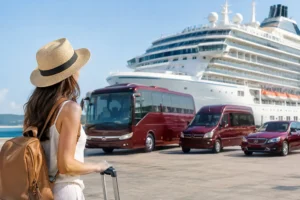
A cruise call in Honningsvåg can feel wonderfully simple: step ashore, see the North Cape, return with the crisp Arctic air still in your lungs. Yet the essential cruise transfer questions are what turn that short window of time into a calm, well-paced journey rather than a race against the clock. Your transfer is not merely the way to reach the cape. It shapes how much of the landscape, stillness and anticipation you are able to enjoy along the way.
Essential cruise transfer questions before you book
Will the transfer work with my ship’s actual timetable?
This is the first question to ask, and it deserves a clear answer. Cruise itineraries can change because of weather, sea conditions or operational decisions, while the time printed on an original itinerary may not reflect the final time guests are permitted to disembark.
Ask for the planned departure point, meeting time and expected return time. A good local operator understands that cruise guests need practical timing, not vague reassurance. They should plan around the port call and allow sufficient time to return to the ship before boarding closes.
It is also sensible to ask whether the transfer is designed specifically for cruise passengers or follows a fixed public timetable. Both can work, but a cruise-focused journey is usually arranged with the realities of port time in mind. You should know exactly where you stand if your ship arrives late or adjusts its schedule.
Where do we meet, and how easy is the walk from the ship?
Honningsvåg is a small harbour town, but the meeting point still matters after a busy disembarkation. Ask whether a host or driver will meet you near the pier, whether the vehicle is clearly marked, and how far you will need to walk.
This is particularly useful for guests travelling with children, using a walking aid, or simply wishing to avoid uncertainty in an unfamiliar port. Clear instructions should arrive before your journey, including a contact method if you cannot immediately find the group.
A calm start sets the tone. Rather than scanning the harbour for an unnamed coach, you should be able to step ashore knowing where to go and who is waiting for you.
How long will we have at North Cape?
The road journey through Magerøya is part of the experience, with open coastlines, treeless tundra and changing Arctic light outside the window. Still, North Cape itself is the reason many visitors have travelled so far north. Ask how much time is allocated at the plateau.
The right amount depends on what you hope to do. Some guests are content to photograph the globe monument, take in the endless horizon and visit the indoor facilities. Others would like time for a warm drink, an exhibition, a quiet walk or simply a few unhurried minutes looking out towards the Barents Sea.
Be wary of schedules that describe the excursion only by its total duration. A transfer can appear generous on paper while leaving little meaningful time at the destination. Your operator should be open about both the drive and the stop itself.
Questions about Arctic weather and road safety
What happens if weather affects the route?
At the top of Europe, weather is part of the journey. Wind, fog, snow and low cloud can arrive quickly, even when the morning began bright and still. This is not a reason to avoid the North Cape. It is a reason to choose a provider that treats local conditions with respect.
Ask how the operator monitors the forecast and road situation, and who makes the decision if conditions change. On some days, visibility may soften the view. On rarer occasions, road restrictions or safety advice may alter the plan. An honest answer is better than a promise no Arctic operator can responsibly make.
Professional drivers who know the roads understand when to proceed carefully, when to wait, and when a route cannot be used. Your comfort comes from that judgement. The landscape remains remarkable in shifting weather too: clouds moving across the plateau, snow catching the light and the wide, quiet feeling of the far north.
Is the vehicle comfortable for the conditions?
Comfort is more than a soft seat. On a North Cape transfer, it means a well-maintained coach with reliable heating, room to settle in and large windows for the scenery. Ask whether there is space for a small day bag and whether the vehicle is suitable for guests with limited mobility.
If you are travelling in winter or shoulder season, dress for time outdoors rather than for the coach alone. Warm layers, a windproof outer layer, gloves and sturdy footwear make the stop at North Cape much more enjoyable. The weather can feel considerably colder on the plateau than in the harbour.
There is a useful balance here. You do not need expedition equipment for a guided visit, but Arctic conditions reward sensible preparation. A thoughtful transfer operator will tell you what to expect without making the journey sound difficult.
Booking questions that prevent surprises
What is included in the price?
Before reserving, check precisely what the fare covers. Ask whether it includes the return transfer, the North Cape entry fee, guiding or commentary, and any planned stops. If an element is not included, it should be stated plainly before you book.
Also ask about cancellation terms and what happens if your cruise ship changes its port call. Flexible conditions can be valuable, but the detail matters. Find out how changes are handled, whether you need to contact the operator yourself, and when a refund or alternative arrangement may apply.
Online booking should be straightforward, with a confirmation that gives you confidence rather than further work. Keep that confirmation accessible on your phone, but save the meeting details somewhere you can still reach if your connection is poor in port.
Will there be local insight during the journey?
A direct ride can get you to North Cape. A well-led transfer can help you understand where you are. Ask whether the driver or guide shares information about Honningsvåg, Magerøya, local life, wildlife and the conditions that shape this northern community.
The best commentary leaves room for the view. You may hear about fishing villages, reindeer on the island, or the remarkable seasonal changes in light, then have a quiet stretch to watch the road unfold. That measured pace is often what guests remember.
As the region’s oldest bus company, North Cape Chauffeur Services has built its Polar Express journeys around this combination of dependable transport and local perspective. The aim is not to fill every minute with noise, but to help you feel looked after in a place that deserves attention.
Questions for families, groups and independent travellers
Can the journey accommodate our particular needs?
If you are travelling as a family, ask about child seats and age requirements before booking. If someone in your party has reduced mobility, describe their needs honestly and ask what support is possible at the coach and at North Cape. A few details shared in advance can make the day more comfortable for everyone.
Small groups may also want to know whether they will travel with other cruise guests or have a private arrangement. A shared coach is often an excellent choice for couples and solo travellers who value good organisation and a sociable atmosphere. A private transfer may suit a family group seeking greater flexibility. Neither is automatically better; the right choice depends on your available time, budget and preferred pace.
What should I bring for the day?
You will want a camera or phone, but do not let photographs become the whole visit. Bring water, any personal medication, a portable charger and layers suitable for wind and changing temperatures. Sunglasses can be useful in bright snow or low Arctic sun.
Most importantly, bring a little patience for the conditions. The North Cape is not a stage set with guaranteed blue skies. Its power often lies in its unpredictability: the wind at the globe monument, a break in the cloud, or the sudden stillness when you look north and realise there is very little between you and the polar sea.
When you ask thoughtful questions before leaving the ship, you create space to be present when you arrive. Let the practical details be settled early, then allow the road north to become part of the memory you came here to make.