
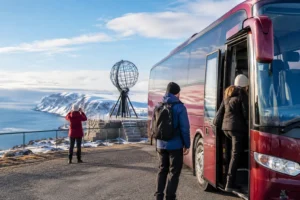
The question “is coach seating reserved” often comes up just as a North Cape journey begins to feel real. You may have a cruise departure to work around, a child who prefers to sit near a parent, or simply a wish to settle into the coach without uncertainty. The reassuring answer is that a confirmed booking normally reserves your place on the departure. Whether it reserves one particular numbered seat is a separate matter and depends on the service and booking arrangement.
For most visitors, this distinction is simple once it is clear. Your reservation means there is room for you to travel. A specific seat number may be allocated in advance, offered for selection, or chosen when you board. The right arrangement is the one that keeps the journey calm, fair and practical for everyone travelling through the Arctic landscape.
Is coach seating reserved, or is it first come, first seated?
On a scheduled coach excursion, a booking is usually the essential reservation: it secures your place on that departure. This is particularly valuable in Honningsvåg during busy cruise calls and peak visitor periods, when independent travellers and organised groups may be heading towards the North Cape at similar times.
Numbered seating works differently. Some services assign seats automatically, while others use open seating after boarding. On smaller vehicles, such as minibuses and maxi-taxis, fixed seat numbers may not be practical at all. Private tours are naturally more flexible, as the vehicle is reserved for your own party.
It is best not to assume that the seat you choose online, the place you occupied on an earlier journey, or the front row you hope for will be guaranteed unless your confirmation says so. Check the booking details before departure. If exact seating matters to you, ask before you reserve rather than leaving it to the day of travel.
This approach avoids disappointment and allows the operator to accommodate genuine needs properly. A request for a seat close to the front because of limited mobility, travel sickness, or a young child is different from a simple preference for a window view – although both are worth raising early.
What your coach reservation should give you
A well-managed coach reservation offers more than a name on a passenger list. It gives you confidence that a suitable vehicle, a professional driver and a planned departure are in place for your journey. When your time ashore is limited, that certainty matters as much as the seat itself.
For a North Cape excursion, the journey is part of the experience. The road across Magerøya passes open coastal scenery, treeless plateaux and long Arctic horizons that can look entirely different from one hour to the next. Knowing your travel place is arranged lets you look out for reindeer, changing light and the stillness of the landscape rather than worrying about logistics.
Your booking confirmation should make the essentials clear: the departure point, meeting time, expected return time and any relevant instructions for boarding. Keep it available on your mobile phone, but it can also be sensible to save a screenshot where reception may be limited. Arriving a little early gives the driver time to welcome passengers and helps the coach leave punctually.
When it is worth requesting a particular seat
Seat requests are most useful when there is a practical reason behind them. If you have reduced mobility, use a walking aid, are travelling with a small child, or feel unwell on winding roads, contact the operator as soon as possible. Early notice gives the best chance of finding a comfortable solution and assessing whether the planned vehicle is suitable.
Couples, families and friends may also wish to sit together. On many coaches this can be accommodated when the request is made in advance, but it cannot always be promised on a fully booked shared departure. Groups booked under one reservation should usually be seated together where possible, especially when the booking is made early.
The front seats are often popular because they offer a broad view of the road and make boarding easier. They can also feel busier, with more movement around the entrance. Seats further back may feel quieter, while those over the wheels can be less comfortable for travellers who are sensitive to motion. There is no single best place for every guest.
If your priority is the view, remember that Arctic scenery rewards both sides of the coach. The light, weather and direction of travel shape what you see. A window seat is lovely, but a relaxed journey with enough time to take photographs at planned stops can matter more than one particular row.
Cruise passengers: protect your return timing
Cruise guests often ask about reserved seating because they want every detail settled before leaving the ship. That is entirely understandable. The key question is not only where you sit, but whether the excursion schedule is designed around the agreed port times and whether you know exactly where to meet.
Choose a departure with clear timings, allow time to return to the ship, and follow the meeting instructions provided with your reservation. Do not rely on a last-minute walk-up place when your ship’s all-aboard time is fixed. A confirmed booking gives the day a calmer rhythm from the start.
Seating on private tours and group coach hire
Private transport is usually the simplest choice for travellers who need more control. Whether you are a family, a small group or a tour organiser, the vehicle can be matched to the group size and requirements. With your own minibus, maxi-taxi or coach, you can agree practical seating needs before the journey begins.
For larger visiting coach groups, the picture can be slightly different. An organiser may already have a seating plan for their own coach, particularly where passengers remain on board for several days. Local support can still be arranged around that plan, including an experienced relief driver who operates the visiting coach while the regular driver takes mandatory daily rest.
This is especially useful for a late-night midnight sun visit to the North Cape. Passengers can continue their excursion with a qualified local chauffeur at the wheel, while the regular driver receives the rest required by law. The arrangement protects both safety and the guest experience – nobody should have to choose between a memorable Arctic evening and responsible driving hours.
Where a local vehicle and driver are provided instead, the group organiser should share passenger numbers, luggage needs, accessibility requests and preferred timing as early as possible. Good planning makes seating straightforward and leaves more room for the pleasures of the road.
A few practical details before you board
Arctic weather can change quickly, even in the brighter months. Dress for the destination rather than the warmth of the coach: outer layers, sturdy footwear and protection from wind are sensible when you step outside at the North Cape. The coach offers a comfortable place to warm up between stops, but the crisp Arctic air is part of the visit.
If you require a particular seat for comfort, mention it when booking and again when you arrive. Be clear, polite and realistic about what you need. Drivers and local teams will do their best to help, while also balancing the needs of other guests and the safe operation of the vehicle.
Finally, board with time to spare and keep personal belongings tidy around your seat. A coach works best when aisles and exits remain clear, especially when passengers are wearing bulky outdoor clothing. Once everyone is settled, the practical questions can fade into the background.
At North Cape Chauffeur Services, the aim is not to rush you from one point to another. It is to make the road to the North Cape feel dependable, comfortable and quietly memorable – with a confirmed place for you, space to breathe, and the endless horizon waiting ahead.