
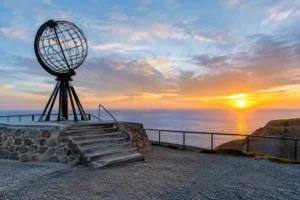
The first sight of North Cape is not always a golden sunset or a cloudless sea. It may be a sweep of low cloud, crisp wind across the plateau, and an endless horizon appearing and disappearing through the Arctic weather. That is precisely why travellers ask, is North Cape worth visiting? For many, the answer is yes – not because it promises a perfect photograph, but because it offers a powerful sense of having reached the edge of Europe.
North Cape is a destination for travellers who value atmosphere as much as a tick on the map. The journey from Honningsvåg, the changing light, the open tundra and the moment you stand above the Barents Sea all form part of the experience. With realistic expectations and enough time to enjoy it calmly, it can become one of the most memorable moments of a Norwegian holiday.
Is North Cape worth visiting for first-time Arctic travellers?
For most first-time visitors to Northern Norway, North Cape is worth visiting because it brings several Arctic experiences together in one accessible journey. You do not need to plan a remote expedition or navigate unfamiliar mountain roads alone to feel the scale of the far north. From Honningsvåg, the route leads through a landscape that is sparse, dramatic and unexpectedly varied.
There are treeless hills, broad valleys, small fishing communities and, depending on the season, snow fields or grazing reindeer. The road itself is part of the story. It gives you time to leave the bustle of a cruise port or town behind and settle into the quieter rhythm of Magerøya.
At the plateau, the iconic globe monument provides the recognisable moment many travellers have imagined before arriving. Yet the stronger memory is often less obvious: standing close to the cliffs, feeling the cool air, and looking north across a vast stretch of sea. There is very little between you and the horizon.
North Cape is especially rewarding if you are drawn to places with a genuine sense of distance. It is not a conventional attraction filled with constant activity. Its appeal lies in space, weather and the feeling of being somewhere few journeys ever reach.
What makes the journey more than a viewpoint
A visit can be brief, particularly for guests arriving by cruise ship, but it need not feel rushed. The difference is how the time is used. Travelling with a local, professionally driven transfer means you can look through the windows rather than concentrate on road conditions, directions or where to park. In Arctic weather, that peace of mind matters.
A comfortable coach journey also allows the landscape to arrive gradually. The North Cape is more meaningful when it is approached through the island rather than treated as a simple stop-and-return transfer. A trained local driver understands the route, the changing conditions and the importance of keeping the journey steady and well timed.
North Cape Chauffeur Services has long welcomed visitors from Honningsvåg to the plateau, with an approach built around safe driving, clear arrangements and time to appreciate the scenery. For travellers with a fixed sailing time, that local knowledge can turn a potentially stressful excursion into a relaxed part of the day.
The destination is also suitable for a wide range of travellers. Couples may enjoy the stillness and shared sense of occasion. Families can experience a landscape very different from home without demanding hiking or specialist equipment. Solo travellers often value the reassurance of an organised journey while still having time for their own quiet moment at the cape.
When North Cape may not be what you expect
An honest answer to whether North Cape is worth visiting should include its trade-offs. This is an exposed Arctic plateau, not a guaranteed sunny lookout. Fog can soften the view, wind can be strong, and cloud may hide the distant sea. In winter, snow and changing road conditions are part of life in the far north.
If your only goal is a clear, postcard-style photograph of the globe against a bright blue sky, your experience may depend heavily on the day. Weather here cannot be arranged to suit an itinerary. Visitors who arrive expecting nature to perform on command can leave disappointed.
It may also feel less compelling for travellers who dislike long drives or have little interest in landscapes. The route from Honningsvåg is scenic, but the reward is contemplative rather than action-packed. If you have only a short time ashore and would rather explore local cafés, fishing heritage or a gentler coastal walk, North Cape may not be the right priority for you.
There is another small point of perspective. North Cape is celebrated as one of Europe’s great northern landmarks, though geography is more nuanced than a single monument suggests. Its importance is cultural and emotional as much as technical. You are visiting an internationally recognised Arctic headland with a remarkable setting, not claiming a scientific conquest.
For many guests, this makes the visit more meaningful, not less. The cape does not need to be the absolute northernmost point of every possible definition to offer a profound feeling of north.
Choosing the right season for your visit
The season shapes the experience, so the best time depends on what you hope to feel.
Summer: light, sea views and the midnight sun
During the summer season, the long daylight makes the landscape easy to see and photograph. Around the period of the midnight sun, evening can feel luminous rather than dark, with soft colours stretching across the sky. This is a wonderful choice for visitors who want open views, milder temperatures and the unusual pleasure of being outdoors late at night.
Summer is also busy, particularly when several ships are in port. Booking your journey in advance gives you greater confidence around timing and seating. Bring an extra layer even on a bright day, as the plateau can feel considerably cooler and windier than Honningsvåg.
Autumn and spring: changing weather and quieter moods
The shoulder seasons can feel especially atmospheric. Light changes quickly, weather moves across the island, and the colours of the tundra take on a different character. Conditions can be less predictable, but that unpredictability is part of the Arctic’s beauty.
These months suit travellers who appreciate dramatic skies and do not mind that the view may be different from the images they saw while planning. A misty cape can be every bit as memorable as a clear one when you allow it to be its own experience.
Winter: a true Arctic setting
Winter travel brings snow, polar night conditions for part of the season and a quieter, more elemental landscape. The journey can feel extraordinary, but it requires a practical mindset. Warm clothing is essential, and road access is always managed according to conditions and safety advice.
For winter visitors, travelling with an experienced local driver is particularly reassuring. The aim is not to rush through a challenging environment, but to experience it safely and comfortably. If conditions limit visibility, the journey through the snow-covered island may still be a highlight in itself.
How to make your North Cape visit feel worthwhile
The simplest advice is to leave room for the destination to be what it is. Check the forecast, but do not let it dictate your mood. Arctic weather changes quickly, and a break in the cloud can arrive when you least expect it. Equally, a moody sky can give the plateau an unforgettable sense of drama.
Dress for exposure rather than the temperature in town. A windproof outer layer, warm mid-layers, a hat and gloves make it far easier to stay outside long enough to enjoy the view. Comfortable footwear is helpful, especially if surfaces are wet or snowy.
If you are visiting on a cruise itinerary, choose a transfer planned around your ship’s schedule and allow sensible margins. The pleasure of the excursion comes from knowing someone is looking after the practical details while you take in the landscape. Booking ahead also avoids the uncertainty of trying to arrange transport once you have arrived in port.
Finally, resist the urge to see North Cape only through a camera screen. Take the photographs, certainly, but then pause. Listen to the wind, look beyond the globe monument and notice how far the sea seems to stretch. The quieter moments are often the ones travellers carry home.
North Cape rewards an unhurried state of mind. Arrive prepared, travel with care, and give yourself permission to meet the Arctic on its own terms.